Showing posts with label Aerospace Engineering. Show all posts

2019/08/15

Importance of Control Engineering - Inner/Outer Loops

Here is a block diagram that I've just found during my ATPL preparation for Instrumentation subject. I'd never thought of ever writing about any topic related to Control in Aerospace, as it wasn't my favorite subject at university, however it made me think...
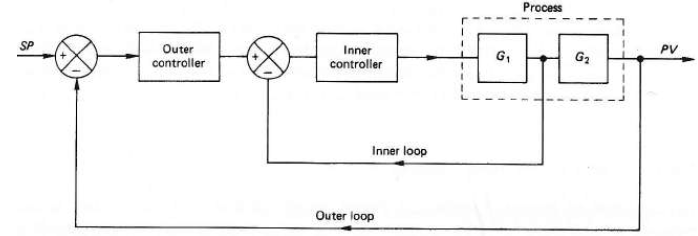
Autopilot Block diagram [AviationExam]
This is a representation of the basic autopilot operating principle including the Outer and Inner Loops. To understand the principles, let's see a bit of theory to understand what do they actually mean.

Inner Loop:
The "primitive/dumb" one, it's stabilizing and maintaining pitch, roll and yaw. The most basic system of an autopilot that provides only stabilization function consisting in controlling movements around the center of gravity of the aircraft is within the inner loop.
General structure of Inner Loop

Example of a typical Inner Loop Control System
Outer Loop:
Provides the autopilot with navigation (guidance) function. It adds the intelligence to the process (e.g. tracking a radial, holding a speed, climbing a VNAV path) The outer loop tells the inner loop what pitch, roll or yaw to hold for the maneuver, then the inner loop executes this. All the "intelligence" involved is mainly done in this loop.
Examples of outer loop autopilot operating modes:

Roll modes:
  • HDG (Select & Hold)
  • Nav Track (Track Hold)
  • VOR/LOC (Capture & Track)
  • Lateral Navigation (LNAV)
  • FMS Lateral Navigation

Pitch (flight path) modes:
  • Altitude (Select & Hold)
  • IAS/Mach (Hold)
  • Level change
  • Altitude Acquire (Capture)
  • Vertical speed
  • Glideslope (Capture & Track)
  • Vertical Navigation (VNAV)
  • FMS Vertical Navigation
  • Flare
  • FPAH (Flight Path Altitude Hold)

Combines Roll and Pitch modes:

  • Approach
  • Go-Around
  • Control Wheel Steering (CWS)

    Cascade Control System:
    The cascade control system includes a second feedback loop. Cascade control gives an improvement over single-loop control handling disturbance inputs. The effects of cascade control system are an increase in the system bandwidth and a reduction in the sensitivity to disturbances entering the inner loop.
    Cascade Control System structure
    Ok, so what's the connection with all these simple theory and my past university assignment?
    Back in the days, I had to create a project in which the task was the following:

    Project description:
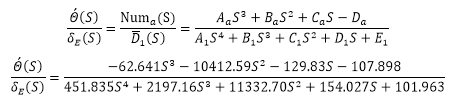
    To generate a cascade control loop for the given transfer function of an aircraft system using PID controllers. The given transfer function is:

    The control variables are pitch and altitude.
    By controlling the measurements of these two variables and combining them using the control system to design, attitude reading is obtained. The general structure of the whole cascade control system for this project is presents in the next figure.
    Inner Loop:
    The main role of this part of the system is to control the changes in pitch measurements which are obtained from the gyroscope. As shown in the figure the errors in pitch are reduced by comparing it to the desired value.
    The structure of the inner loop

    Outer Loop:
    The main goal of this part of the system is to feed the inner loop with the corrected value of the altitude so it could be combined with the aircraft system transfer function to obtain an accurate output.

    The structure of the outer feedback loop (Cascade)
    The simulation was performed for different altitude inputs, and the outputs presented  on graphs. (Aircraft Altitude Change, Aircraft Pitch Angle - Desired Vs Actual, Actual Pitch Angle, Error of Altitudes for 100 and 200m, Error of the Elevator Deflection fr 100 and 200m)

    A cascade control system was generated to control the motion of the actuator that is used to deflect the elevator in order to obtain a desired altitude change. The inner loop minimizes pitch errors and feeds the actual pitch value to the outer loop to obtain an accurate reading.

    Do you see the connection between an engineering approach for an automation system that is employed on aircraft and the importance of understanding Control theories?
    All these are connected. Whether it's engineering or piloting, you're going to meet with Control and basic Control theories everywhere, where automation is applied. Respect Control. Accept it, and learn the basics to conveniently tackle the obstacles in your career.

    2016/09/19

    Thesis topic evolution

    Many of us, engineering students undergo the following dilemma when it comes to selecting the final thesis. In this blog you will read about how my topic has been evolved during the years, what ideas were circling my mind during the semesters, until the final version of the work was chosen. Because it's just not that simple to choose.

    Looking back at my 5th semester (3rd year on BSc studies), I knew that I would like to do 'something related to Aircraft Design'. Later in that year, I become more interested in landing gears and I imagined doing some design related to them.
    Optimized trapezoidal strut
    In the 6th semester, I was to choose an Intermediate Engineering Project (or a so-called pre-engineering thesis). This was the time when I first had to choose a topic wisely because it could have an effect on my final thesis. I was looking for a supervisor, who could give me a task about landing gears and this is how I made a project on a static analysis and a preliminary design of a UAV's landing gear.

    In the following semester, I was about to continue this project and make a dynamic analysis as well and with more calculations involved, however I resigned from this topic. This was the time when I had an opportunity to work for an aircraft manufacturing company, doing some practical work for them. I was interested in structural design and I signed up for FEA (Finite Element Analysis) of an agricultural aircraft's control surface. Just before beginning the work in October 2015, I was offered an actual task about the vertical tail which has undergone some modifications and its calculations were required by the company.

    Buckling calculation of stringers on the
    vertical tail (Extract from thesis)
    In December, the topic of my thesis was called: Structural analysis of PZL-106BT Aircraft’s Vertical Tail with a CAD/CAE Based Multidisciplinary Process. This is when the fun began with the introduction to the Multidisciplinary process. As I started working on the thesis, the work became more and more specific. I changed the main focus about the calculated case, and renamed the topic to: Multidisciplinary Structural Analysis of the Vertical Tailplane of PZL-106BT Aircraft.

    This wasn't the end however, as I kept on working till May 2016, when the final topic became clear. The thesis is called: Finite Element Analysis of the Vertical Tailplane of PZL-106BT Aircraft with a CAD/CAE Based Multidisciplinary Process.
    Flowchart of software compatibility for FEA (Extract from Thesis)


    This would be all of my engineering thesis' evolution over the last two years. On the following timeline, this evolution is shown.
    Others with similar studies might have similar workflow but for those who can't decide easily, I advise to try many things to find out about you real interests and to enjoy the work you have chosen. All the best for your future work.

    More about the thesis will be presented in another article, or at special request.

    2016/07/26

    Keep away from jet engine

    "In thrust, we trust!"
    Jet engines are powerful parts of aircraft that shall be always approached with care, based on their enormous thrust creating capability, which is the result of acceleration of gas (air) flowing through the propulsion system (engine, or engine + propeller). Actually, why jet engines are so dangerous?

    Hazard warning decals on a CFM56 engine nacelle
    As a civil traveler, turbofan engines are the ones you are most likely to come across at an airport (turboprops too, but let's leave them for another talk). If you look carefully, you may notice a red warning sticker on the side of the engine nacelles. If you've ever been wondering what does it mean, and never had the chance to observe it carefully, then here it is:
    Speaking of turbofans engines, those are the ones with transonic velocity regime (Mach numbers from 0.75 to 0.9). Looking into the front core of the engine, the large fan can be seen, so the air entering the core first passes through the fan and is partially compressed by it. Most of the air, however, bypasses the core and goes directly to an exhaust nozzle. This is why these engines are also called as bypass engines. The remaining air inside, called the core stream, proceeds directly to its own exhaust nozzle, through a series of compressor blades (high- and low-pressure), to the combustion chamber and leavers the nozzle after the turbine stage.
    Schematic illustration of major components on an engine (Trent XWB engine on Airbus A350-941, F-WWCF)
    A key parameter for classifying the turbofan is its bypass ratio, defined as the ratio of the mass flow rate of the bypass stream to the mass flow rate of the core stream. Having very high bypass ratio involves the use of fans with very large diameters, even up to 3 meters. The bigger the diameter, the more efficient the engine will be. Those huge fans, rotating with large rotational speed can cause a huge suction in front of the engine. The core stream that is leaving the engine has temperature of 300-500°C, as they mix with the bypass air. Hot and strong stream of air leaving the engine can have very powerful blowing effects, as presented in the videos below. This is the reason why the one should avoid a running engine. (even a standing one can cause burning injuries if it's after operation)

    Another major issue is the engine inlet and its risk of ingestion. The working principle of jet engines is based on simple physics. An operating engine will introduce low air pressure in the inlet. As a result of this low pressure, the air will move towards the engine core. As the air flows into the engine, the amount of air near the inlet will have higher velocity that the rest, further away from it. The suction is the strongest at the inlet. (Think about a similar example in a bathtub full of water. If you unplug the tub, the water will start flowing out. At the outlet, which could be our engine inlet, huge suction is present.) Due to this huge suction effect of an engine, it is dangerous for any ground personnel to stay in the vicinity of a jet engine.
    CFM56 engine hazard area

    The clearance distance for high-bypass engines, with 2-3 meters fan diameter, is usually about 10 m to the front and 50 m to the rare. The picture shows the hazard areas for CFM56 engine, which has fan diameter of only 1.55 meter. This area however can vary with different engine power settings.


    The following collection of videos are intended to show how dangerous the blast, or exhaust of a running jet engine can be.
    Starting with a van that is being destroyed by the jet blast:

    Following with a famous car vs. Boeing 747 example in Top Gear TV series:

    Lastly, humans can be blown away too, which occurs usually at St. Maarten:

    Another topic involved with jet engines is: F.O.D.  (Foreign Object Debris/Detection/Damage), which now should be obvious why it is dangerous for the engines and rotating elements. Foreign object damage is a result of any foreign debris or object that is sucked by the inflow. The debris can come from any ground vehicle, wind, ground personnel or even from other aircraft. The importance of a clear ground and runways is therefore crucial at areas where airplanes are taxiing and flying. Not only it is a threat on the ground, as flying birds can be sucked too - known as 'bird strike' incidents. Coming back to the damage that they can cause are very varying. Engines are designed to withstand major damage that could be caused by small metal objects. Special tests have to be passed in order to give certificates to any engine. Usually a frozen chicken is shot to the engine, which has to keep all of its damaged parts inside the nacelles. They can not cause any further damage to the rest of the aircraft. The following video is presenting this testing.
    The major issue here is however the functionality of the engine later on. The foreign objects could break off blades, those metal parts will cause further damage to other parts, which all will result in a reduction of thrust, or even an engine shut-down. This is very crucial when approaching the ground or during takeoff. Bird feather and bones are the most unwanted "by-products" of a bird strike, which can seriously damage the turbine blades by clogging its cooling holes.

    I would like to finish with a funny but at the same time memorable example of a FOD case. It happened to a Delta Airline's plane, when during taxiing, another aircraft's jet blast blew the empty cargo container away, which was then sucked by the inlet of another taxiing airplane. All the topics of this article is covered on one photo.
    Delta Air Lines cargo container in engine, Febuary 1999
    Have you noticed too that the warning decals are missing from the side of the engine?


    _________________

    References:
    • http://www.boeing.com/commercial/aeromagazine: Fred Zimmer - Preventing Engine Ingestion Injuries When Working Near Airplanes
    • http://www.cargolaw.com/1999nightmare.html
    Cover picture: Engine Alliance GP7000 engine

    Video's URL, in order of appearance:

    • https://www.youtube.com/watch?v=Q6AKVMtj5Kc
    • https://www.youtube.com/watch?v=ZJ9uWsvR1l0
    • https://www.youtube.com/watch?v=eV21f1MZ5iU
    • https://www.youtube.com/watch?v=_jfXX7qppbc

    2016/03/17

    What is Aerospace Engineering really about?

    Probably many of you (colleges) have came across the situation of telling someone about your studies like:
    "-I study Aerospace Engineering..." 
    "-Oh, Space Engineering? Cool!"
    "-NO, It's not only about space..."

    And this is the end of the conversation. (Ok, some people may be more interested and they want to know what is this about.)

    "The primary focus of the aerospace engineer is the design, construction, testing, and evaluation of craft that move through the atmosphere or outer space. This broad focus includes vehicle as simple as sled, bicycle, or automobile and as complex as high performance fighter aircraft such as the F-22 Raptor, or spacecraft such as the Space Shuttle or SpaceShipOne.
    Falcon-9 Rocket lands on droneship, SpaceX


    Most aerospace engineers specialize in one of the four major disciplines that must be understood to design a successful vehicle or enable it to safely operate: aerodynamicsavionicsmaterials science, and propulsion."[1]

    According to 'definition' it is;
    "Aerospace engineers design aircraft, spacecraft, satellites and missiles. In addition, these engineers test prototypes to make sure that they function according to plans. These professionals also design components and subassemblies for these craft; those parts include engines, airframes, wings, landing gear, control systems and instruments. Additionally, engineers may perform or write the specifications for destructive and nondestructive testing for strength, functionality, reliability, and long-term durability of aircraft and parts."[2]

    As I usually define it to people; it is Aircraft / Aeronautical Engineer + Astronautical engineer.

    In practice, we are the so-called "rocket-engineers" or the "top engineers", which is true on one hand. We study everything from all other engineering fields, no matter what you are specializing in in the future.

    I would like to summarize the graduate course in a bit deeper way, focusing on the subjects and on the knowledge they can give us. (Here, I would like to note that many universities offering this course might have different syllabus, I am presenting what I have studied during my 3,5 years.) Many future or present students may find this collection useful for their studies.
    just for fun

    1st year:
    This is the nightmare of all freshmen students. Your previous life changes from a normal human into a totally weird/nerd/unsocial one. You will be forced to study every day, no weekends guaranteed, daily attendance+studying time a day can be even up to 16 hours. If you are from a high-school that didn't teach you the basics properly, you'll suffer more.
    • You learn calculation tools like; Algebra, Calculus 1-2,
    • You spend endless hours of redrawing your Engineering drawings,
    • You start learning a programming language; this in most cases is C (the hardest one) to help with the crazy computations that you'll meet during your studies,
    • Mechanics 1-2, Materials, Physics, Mechanics of structures, Thermodynamics, Electronics are all part of this lovely year, just to make your life harder with those other subjects that you are already failing and struggling to pass. But these basic subjects are just to be an introduction for the upcoming years.
    • If all these wasn't enough, you learn additional, irrelevant subjects, just to have an even wider knowledge on all other fields of science; Philosophy, Environment, Economics, or a foreign language. (That last one is actually important.)

    2nd year (3rd semester):
    Let's assume, you have passed somehow that first year and still want to continue your Aerospace course. You hear it from others that "oh, second year will be easier". Definitely, but not on this major. It may feel slightly easier, because you are adapted to such a lifestyle that doesn't involve friends, you gave up all your hobbies and you are not freaking out if you have not a single weekend in half a year. You eat breakfast at 7, lunch at 19-21pm, dinner at midnight. The 2nd year is when the fun begins. This is when you actually see airplanes on the slides and are so excited about the new subjects.
    Programming a CNC machine for milling
    • Calculus 3 is giving you more nightmares, but it is now making a lot of sense.
    • Engineering graphics is turning into Computer Aided Design (CAD),
    • Fluid mechanics and Basics of Control and Automation requires you to use all your Calculus skills, even the ones you have not yet studied. (Catch 22)
    • Machine Design begins, offering all nice and practical theory and calculations related to metal fatigue, calculations for those elements that you had to draw all the time on Graphics in the last year, you learn mainly about their design,
    • Manufacturing technology will teach you how things are made.
    • Mechanics of structures 2 seems like a piece of cake and you start to enjoy solid mechanics, as long as it's easier to understand than fluids.
    • Aeronautical systems 1. is you favorite subject this semester, which you enjoy following as an aviation addict, and you want to correct the teacher about ILS. But you may not knew the operation mechanism of the HSI.
    • Finally you have other introductory subject into Aerospace, Materials in Aerospace (now a more specific one as before),

    still 2nd year (4th semester):
    Now you start feeling something neutral. If you have passed everything so far, you start to meet your old friends or the new ones that also passed everything, if not, you are still determined and ready to retake some subject with the new 12 others. Here is when everything gets messed up. But it is also the turning point.
    • Aerodynamics, the long awaited subject, that is as cruel as Fluid Mechanics was, but you study the air more deeply, not those pumps, dams or Hagen–Poiseuille flow, for instance. Your favorite equation is Navier-Stokes, but you still have no idea how to solve it.
      Fluid Mechanics consultation with prof.
    • Astronautics, just in case to learn something at last about the space,
    • more Electronics, labs, and Electric circuits,
    • more Machine Design (now gears, clutches, and many more fun mechanism)
    • As for other laboratories are concerned, you will have them too. Machine Design, Mechanics of structures, Thermodynamics or even Aerodynamics labs. They are really amazing and you can't wait to attend the next class, apart from the fact that you have to prepare tonnes of reports and study for entry tests. This is where you either way have to work in a team, if so far you haven't gained this skill.
    • Mechanics of Flight, together with its lovely projects. Got to choose your aircraft, but pick wisely, you will spend your next one year working on it every week. Calculations of all kinds of graphs within Mechanics of aircraft. Pretty nice subject.
    • Propulsion systems, to know how piston engines and jet engines, etc. work,
    • Last but not least, Computer science continues, or i should rather call it Numerical methods. Yeah, those Runge-Kutta ODE-s and writing C programs to calculate Gauss-Elimination and the rest.
    After successfully finishing the 2nd year, you came to a point where you can take a huge breath. You are able to survive whatever comes after, and you can start thinking of going for a beer or a date.


    3rd year (5th semester):

    This semester is a continuation of previous subject together with additional more.
    • Aeronautical systems 2.,
    • Aircraft Design 1. your favorite subject finally has come. Theory of everything on an aircraft, structures of fuselage, wing, empennage. Nice and time consuming projects where you can start the design of you own aircraft.
    • Aircraft Engine Design 1. if you like propulsion more, here you have it.
    Did I mention propulsion?
    Hinge system on a UAV rotorcraft
    • Chemistry of combustion, just to hate Chemistry even more.
    • Machine Design 3, to know a bit about metal contact, and elastohydrodynamic lubrication,
    • Mechanics of flight 2., now you completely hate that chosen aircraft, but still please calculate 5 more projects about its dynamical behaviors.
    • Rotorcraft Aeromechanics, 'cos you have to answer your friend's question about helicopters too, and you had Mechanics 2. too early, so in case not to forget all the knowledge,
    • Spacecraft design, so that now people can really say that you're a "rocket-scientist",
    • Aircraft Engines Maintenance, to get familiarized about GE, Rolls-Royce or PW engines.
    • Selected Applications of CAD/CAM/CAE Systems - to learn some CAD modelling using professional software like; Unigraphics NX, or Solidworks, or AutoCAD, etc.


    (6th semester):
    Now you can say, you've done something. Let's say you are over half of it. Keep working on!
    Business Jet wing loads calculated with AVL
    • Aircraft Design 2, still airplanes, still projects, calculations, but it is getting more fun with Xfoil, AVL for aerodynamic computations, or even XFLR for airfoil design. Your programming skills are just about to pay-off.
    • Aircraft Maintenance, to get familiarized, how maintenance of Boeing or Airbus planes are done.
    • Finite element Method (FEM), is a lovely subject after those Mechanics of Structures classes. Now you learn the same as before but applied through FEM theory and FEAnalysis. Using a software like, ANSYS, you perform some calculations during labs. (Now the word lab is always about computer aided calculations or design.)
    • Machine Design continues but this is time for your own design. Design a shaft, control system or a gearbox, up to your requirements. Calculation from scratch, hand drawings, computer drawings, 3D models and calculations, documentations and huge printout drawings.
    • let's have a bit more Physics; Quantum mechanics and Quantum Physics,
    • Simulations of Aeronautical Systems, on which you perform simulation using MATLAB software, calculate dynamic motion equation, and present your ides. Flap, rudder, aileron or similar motion systems.
    • Structure and Assembly of airframes is also an integral part of aircraft manufacturing, learning about technologies used in production, design your own jig or tooling dock.

    That'd be all? No!

    • Intermediate Project, or let's say, a pre-engineering thesis. You need to choose this on your own, get a supervisor and do something 'fun' to prepare you for your actual thesis. In some cases it is also a thesis but a bit less time consuming.


    You've completed 3rd year, congratulations! You can proudly pass your printed A1 size drawings to your father, show your mid-thesis that you've made but you are still not an engineer with it.

    4th year (7th semester):
    Now that you have completed the most of it, you will have the same amount in one semester. Just kidding, you can sit back, relax and DO YOUR THESIS! Start immediately, because you will end up making it in the next semester. Don't forget about your still ongoing subject, such as:
    Static Pressure plot of a flow in a T-connection, FLUENT
    • Computational Fluid Dynamics (CFD), the lovely Navier-Stokes equation is finally about to be solved, but unfortunately for compressible flow. Don't give up yet, FLUENT is only a user-friendly version for basic flows. Imagine what people with CFD doctor degree do, they code their own calculations for turbulent flow. Aw... too hard to even thing of it. So no reason to panic about your simple PDE and ODE problems. The only reason to panic is if you have forgotten Fluid Mechanics, Aerodynamics or Calculus 1-3, and Numerical Methods. So basically all the "best" subjects.
    • FEM 2. is just a continuation of the previous, more applications, and more colorful images in ANSYS Mechanical program,
    • Simulators, it can be flight or any other. No not flying, rather theory about the design principles, operations and computer network and algorithm used.
    • Vibrations and Aeroelasticity is another integral subject of any Aerospace Engineer, so here you get familiarized about vibration phenomena, the famous flutter, but all of it's types, computation of spring supported models and many more.
    • Aeronautical Regulations is needed in case you will once design your own aircraft, so to know how the certification process is.

    PZL-106 BT aircraft, CAD model of empannage
    Now it's time for your final Thesis. It is not a descriptive 30 pages long, study about airplanes. No, it is engineering so do it as it supposed to be done. Design, create, calculate, model, analyse something that hasn't been done before! Something that can improve Aerospace technology in any way. This is your whole summary of learned few things. You choose your specialization based on this work. If you lack any knowledge, well, time to study on your own. When finishing it finally, you only need to worry about your final defense exam, where you just need to know all about 100 topics, related to all the subject that you've completed. (I hope you still remember what the layout of rockets are or what is the extensometry method in solid mechanics.)

    This is all in a nut-shell about how to become an Aerospace Engineer graduate student!
    just another day at your desk
    Well, did I mention that all these years worth something if you do your Master studies too? As others often say; "this is not as hard a rocket science". I say, this is, so study it accordingly. Be a Master in it, if you want to make something out of it.

    I would like to finish this summary with my favorite quotation that my cousin told be before university:
    "When it gets really hard, remember that it will always be harder!"


    Reference:
    [1] - Aerospace Engineering: From the Ground Up, Ben Senson, Jasen Ritter, pp.4.,2011
    [2] - http://www.livescience.com/47702-aerospace-engineering.html